
Welcome
The Institute for Information Systems (WIN) was established on January 1, 2025 at the Karlsruhe Institute of Technology (KIT). The founding of the WIN Institute at KIT is a response to the growing importance of investigating and designing the digitalization of economy and society from a socio-technical perspective.
The mission of WIN is to create value from information! We strive for top-tier research in information systems and related fields, leveraging unique research infrastructures, strong community ties, and close collaboration with business, society, and politics to drive innovation. We deliver solutions for real-world problems, and inspire as well as challenge our students through research- and practice-based teaching.

_rdax_98.png)
As Artificial Intelligence (AI) continues to evolve, the question of functionally conscious AI systems is shifting from the realm of science-fiction to a prospective future. This study explores the perhaps most controversial and equally speculative question related to AI – functional consciousness. Using typological theorizing enables us to identify and explore four scenarios of functional conscious AI, which we contextualize using health services, and further illustrate through the literature on technology-enabled service, AI consciousness, and digital ethics. By challenging common assumptions and by examining the implications of AI consciousness, this study offers new thinking to help navigate this rapidly emerging frontier and prepare for a digital future where machines may not only process information and independently generate insights but also experience their own existence.
_rdax_1024x768_98s.jpg)
As part of the Triangel Days of Democracy, the SOSEC consortium hosts How Are You, Democracy? – Academic Conference on Measuring Sentiment and Polarization in Times of Crises on June 25, 2026 at Kronenplatz, Karlsruhe. The Karlsruhe Institute of Technology (KIT) and the FZI Research Center for Information Technology invite researchers to submit poster contributions by June 10, 2026. The conference brings together empirical research on how social sentiment, polarization, and trust in institutions co-evolve during political and societal crises. We welcome contributions from political science, sociology, communication research, computational social science, psychology, and adjacent fields. Accepted posters will be published in a curated online collection after the conference. Participation is free of charge.
More%20on%20Explainable%20LLM-based%20Open%20Data%20Assistants_rdax_98s.jpg)
The Decision Support Systems (DSS) Journal has published the paper "Effective use of open data story authoringportals for enterprises".social good: Design principles for explainable LLM-based open data assistants". The paper is co-authored Till Carlo Schelhorn, Ulrich Gnewuch, and Alexander Maedche from the Institute for Information Systems (WIN), human-centered systems lab (h-lab) and the University of Passau.
Public access to information through open data is critical for achieving the United Nations’ Sustainable Development Goal 16, which promotes accountable and inclusive institutions. However, open data portals often present barriers, such as complex user interfaces and large data catalogs.
More
Bachelor's and master's students studying information systems (IS) at KIT can apply for an IS scholarship. The scholarship will start on October 1st, 2026 and will run for 12 months. Scholarship holders are supported with 300 Euros per month. The scholarship is awarded by the non-profit association "Die Wirtschaftsinformatik e.V." and serves to promote young people in the field of IS. The scholarship is funded by companies that provide the financial support and are involved in the awarding of the scholarship. For the 2025/26 period, overall seven IS scholarships will be awarded at KIT: 3 scholarships from Schwarz Digits KG, 2 scholarships from SAP SE, and 2 scholarships from Atruvia AG. Further information on the scholarships is available via: https://wirtschaftsinformatik.de/community/stipendien-wirtschaftsinformatik/
More
Cognitive and knowledge-intensive work can be automated using generative AI. Is AI outpacing us, or is it rendering us obsolete? What role will human thought and action play in the future? Which skills and competencies will become more important, and which will become obsolete? And what does this mean for learning? What should good education look like, and what should it achieve? These questions - and more - were the focus on the panel discussion “KI kontrovers!” on May 20, 2026 at WU Vienna. Alexander Mädche (Institute for Information Systems, human-centered systems lab) participated in this panel discussion alongside Christoph Wiederkehr, Austria's Federal Minister of Education; Anita Eichinger, Director of the Vienna Library; and Marie-Christine Kainz, a student and Deputy Chairperson of the ÖH WU. The panel discussion moderated by Thomas Grisold, WU Vienna.
More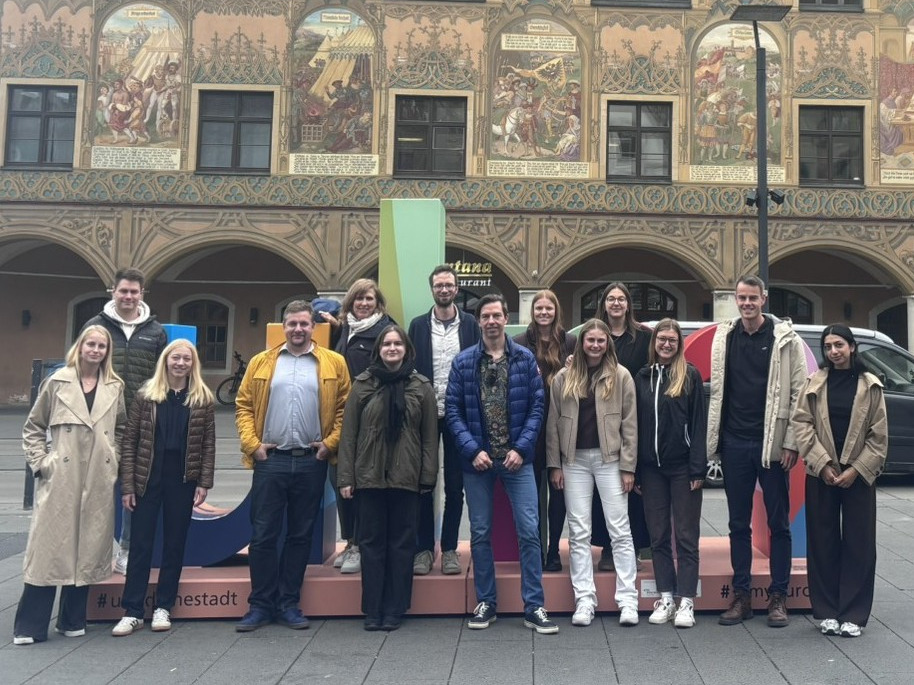
All partners of the BMFTR-funded project EKILED met in Ulm this week for the official kick-off workshop. The project aims to make AI-based disinformation detection transparent and educationally accessible. Researchers from KIT’s Information Systems IV DPS group contribute an interactive explainability component to help users learn from and with the AI system. The consortium coordinated initial activities and laid the foundation for collaboration until the project’s completion in 2029.
More
We are delighted to announce the appointment of Dr. Xuanhui Liu, former member of the human-centered systems lab (h-lab) as associate professor at the Department of Industrial Design of Ningbo University (NBO), Zhejiang in China. Xuanhui worked at the human-centered systems lab in the time frame between 2015-2019 and successfully defended her PhD thesis titled “"Designing Decision Aids for Digital Service Design Technique Selection” in 2019. After finalizing her PhD project, she worked at Hangzhou City University as a postdoctoral researcher. Further information is available here: https://pada.nbu.edu.cn/info/1359/47614.htm
We wish her all the best and look forward to future cooperation.
More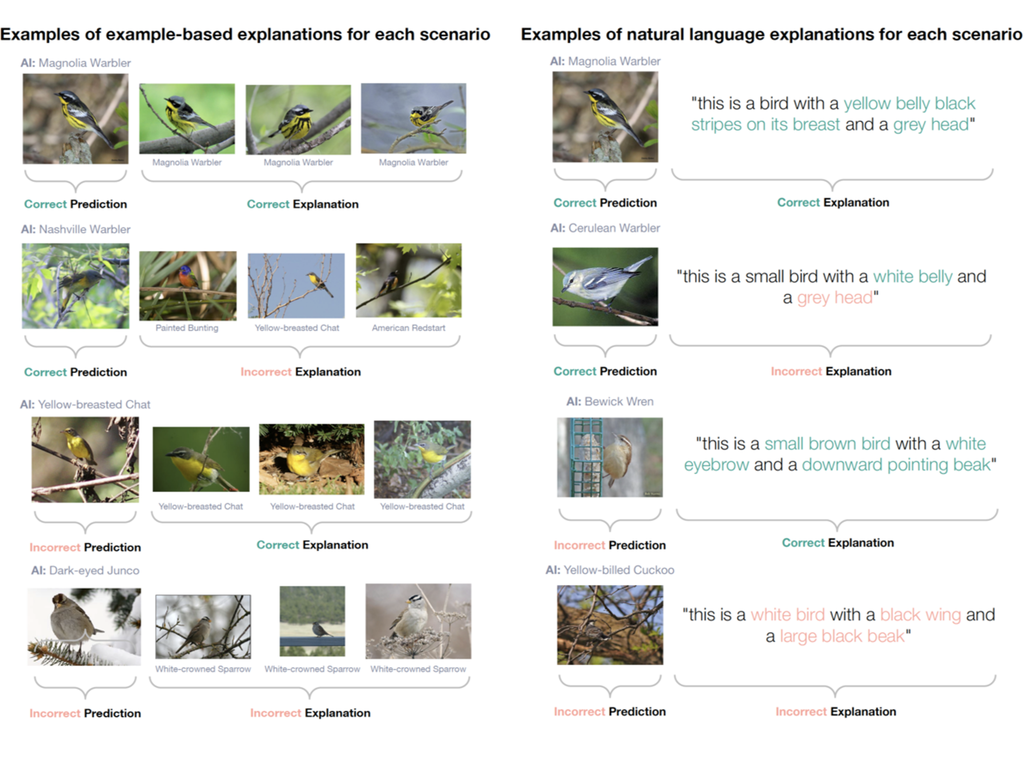
Dr. Philipp Spitzer and co-authors from Carnegie Mellon University and the University of Bayreuth have received the Best Paper Award from ACM Transactions on Interactive Intelligent Systems (TiiS) for their paper “Imperfections of XAI: The work examines how incorrect AI explanations affect human decision-making, with a central finding: they can degrade it. The research demonstrates that users are influenced by incorrect explanations in ways that can worsen their decision-making performance.
More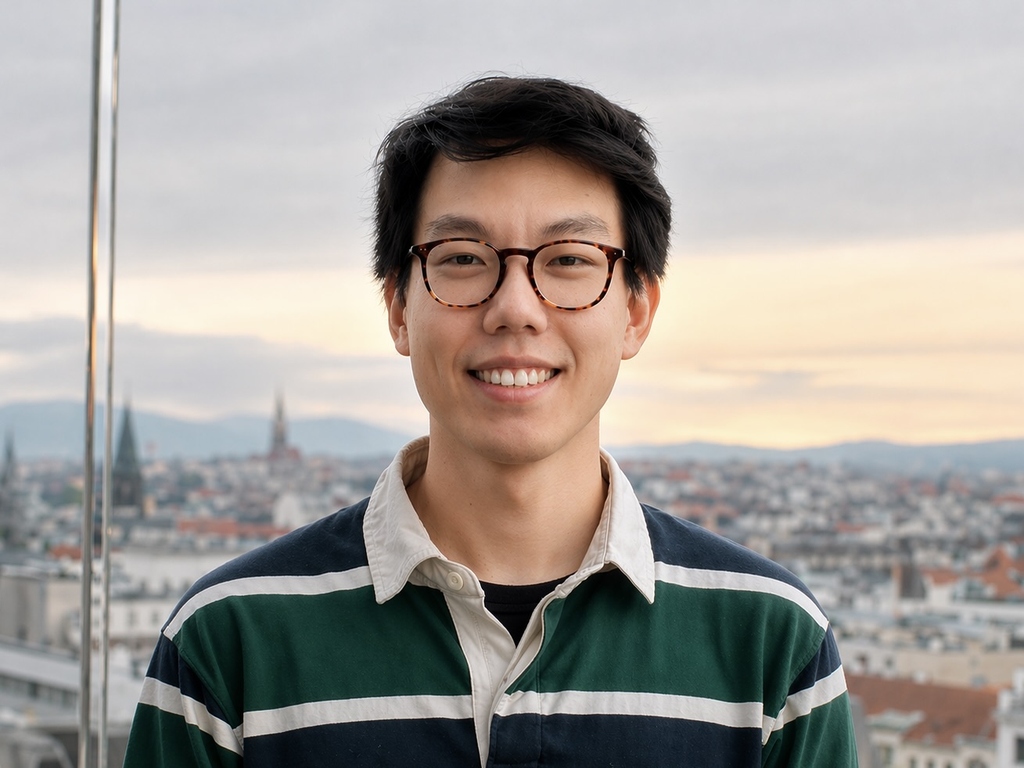
We welcome Felix Wang as a new team member and junior researcher at the Chair of Prof. Weinhardt at WIN. Felix completed his Bachelor's thesis at our chair in 2025, where he explored machine learning techniques for investigating financial decision-making and its psychophysiological correlates based on biosignals. In his subsequent role as a research assistant at our institute, he further gained experience running experiments at the KD2Lab and doing web-development for an EEG data collection tool.
More
We welcome Julian Benz as a new team member and doctoral researcher at the Institute for Information Systems (WIN) as part of the newly formed Chair of Information Systems IV – Digital Platforms & Services under Prof. Maximilian Förster. Julian holds a Bachelor’s degree in Electrical Engineering and Management from HTWG Konstanz and subsequently earned a Master of Science in Information Systems at KIT, where he focused on Machine Learning and Artificial Intelligence.
More
We are proud to congratulate Dr.-Ing. Martin Feick from the human-centered systems lab on receiving the prestigious 2026 SIGCHI Outstanding Dissertation Award as part of CHI 2026 in Barcelona. Martin's doctoral thesis titled “Hand-based Illusions for Haptics in Virtual Reality” was supervised by Prof. Dr. Antonio Krüger at the UMTL (Saarland University and DFKI) and Prof. Anthony Tang at Singapore Management University. Martin’s dissertation advances VR haptics by combining novel hand-based illusions with proxy technology and adaptive personalization.
More
We are happy to announce that the paper “Designing a mobile chatbot-based learning journaling system for intrinsic motivation and engagement” co-authored by Sven Scheu, Simone Löffler, and Alexander Maedche has been published in the International Journal of Educational Technology in Higher Education. The study presents a mobile journaling system with a built-in course and LLM assistant; results show the course boosts motivation, while the assistant increases engagement over time.
More